Linear Drainage Below Ground
Trench Drainage
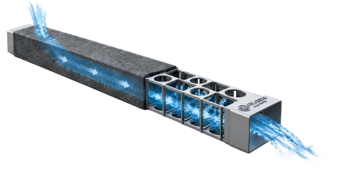
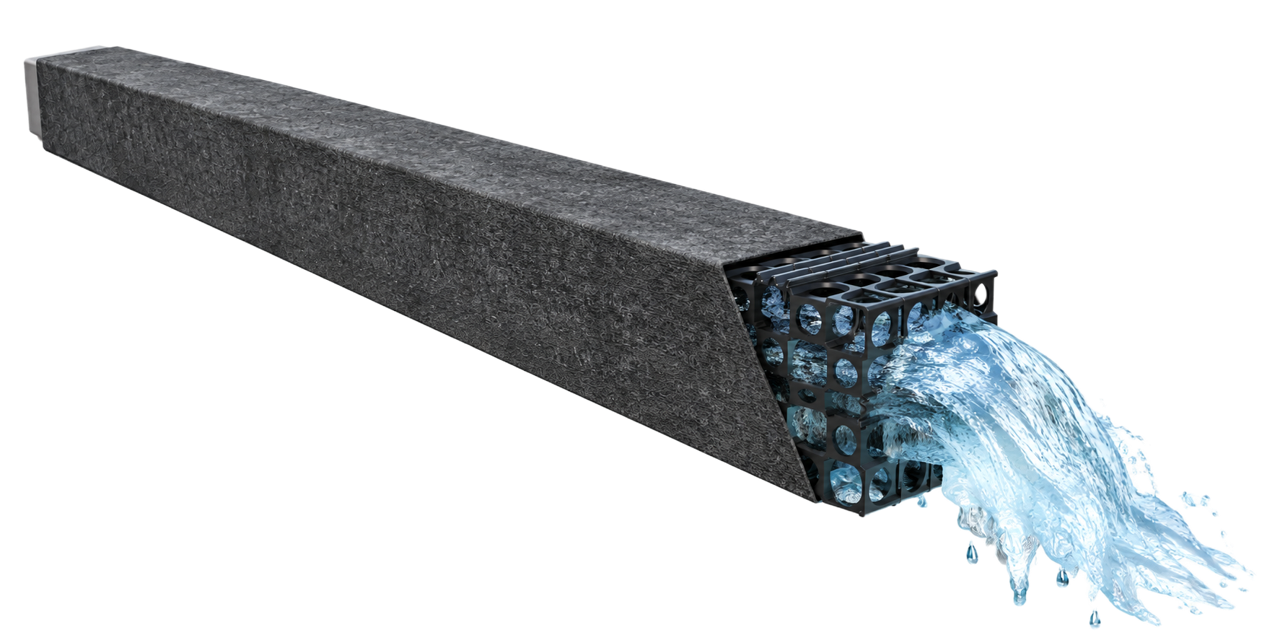
Atlantis trench drainage systems provide a continuous linear pathway within the ground, intercepting subsurface water and conveying it along a defined alignment toward designated drainage outlets
Trench drainage provides a defined linear pathway for collecting and conveying subsurface water through the ground. Installed along a designated alignment, the drainage system intercepts water moving through the surrounding ground and directs it toward a specified drainage outlet or discharge point.
Unlike distributed subsurface drainage layers, trench drainage concentrates drainage within a relatively narrow linear zone. This allows drainage pathways to be established along specific areas of a site where subsurface water needs to be intercepted, collected or redirected without requiring drainage across the entire surface.
The configuration of a trench drainage system should respond to the hydraulic requirements of the project, available depth and alignment, surrounding ground conditions, required drainage capacity and the location of suitable outlets. These considerations determine how the drainage pathway is integrated with the broader civil and landscape design of the site.
How Trench Drainage Works
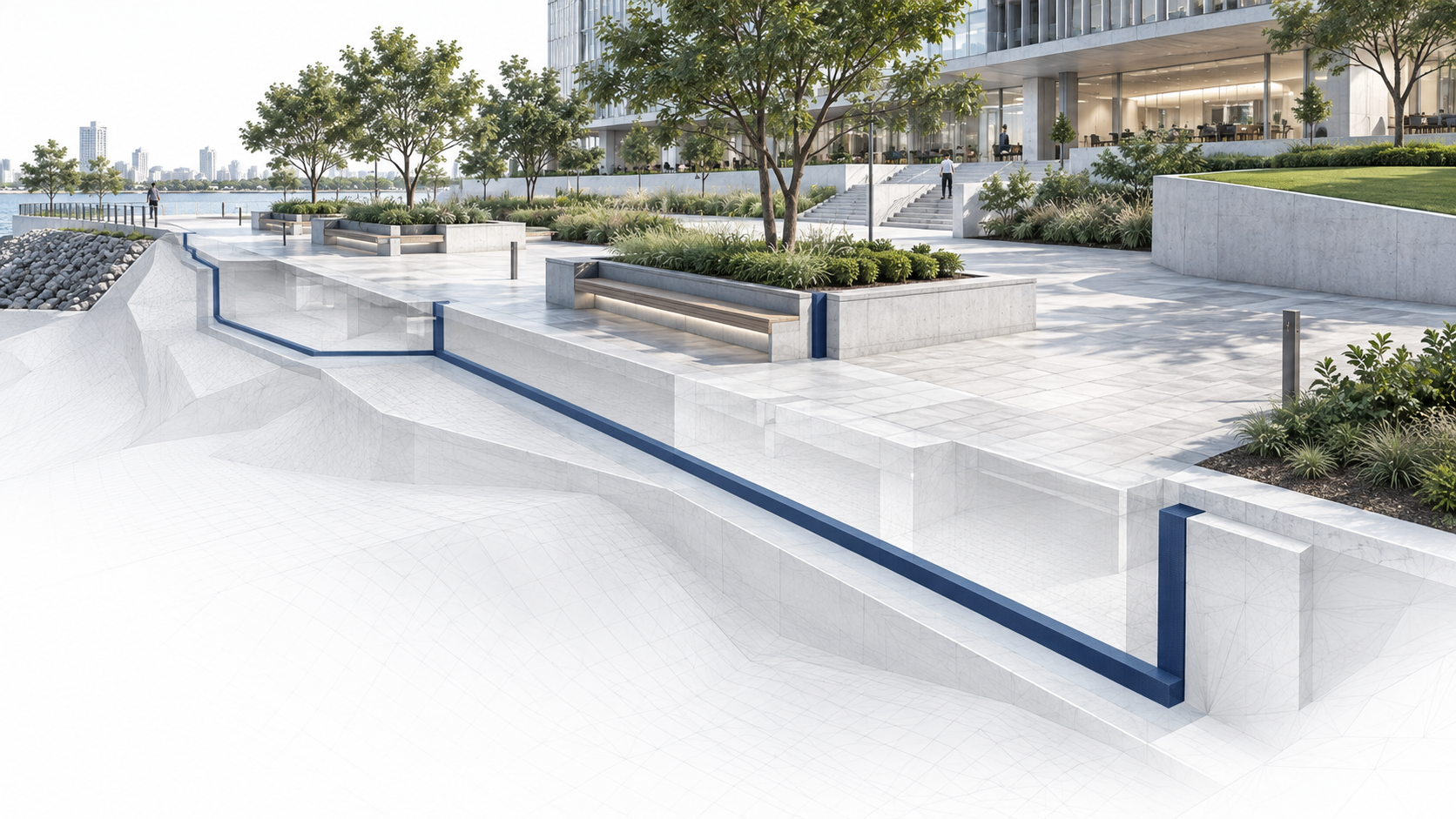
Subsurface water can migrate through the ground in response to rainfall, infiltration, groundwater conditions and local hydraulic gradients. Where this movement needs to be intercepted along a defined area of the site, a linear drainage pathway can be positioned within the ground to collect water from the surrounding soil.
Once intercepted, water enters the drainage pathway and is conveyed longitudinally along the trench toward the project’s designated drainage outlet or discharge point. The alignment, depth and configuration of the system are determined by the site conditions and the hydraulic requirements of the project.
Applications
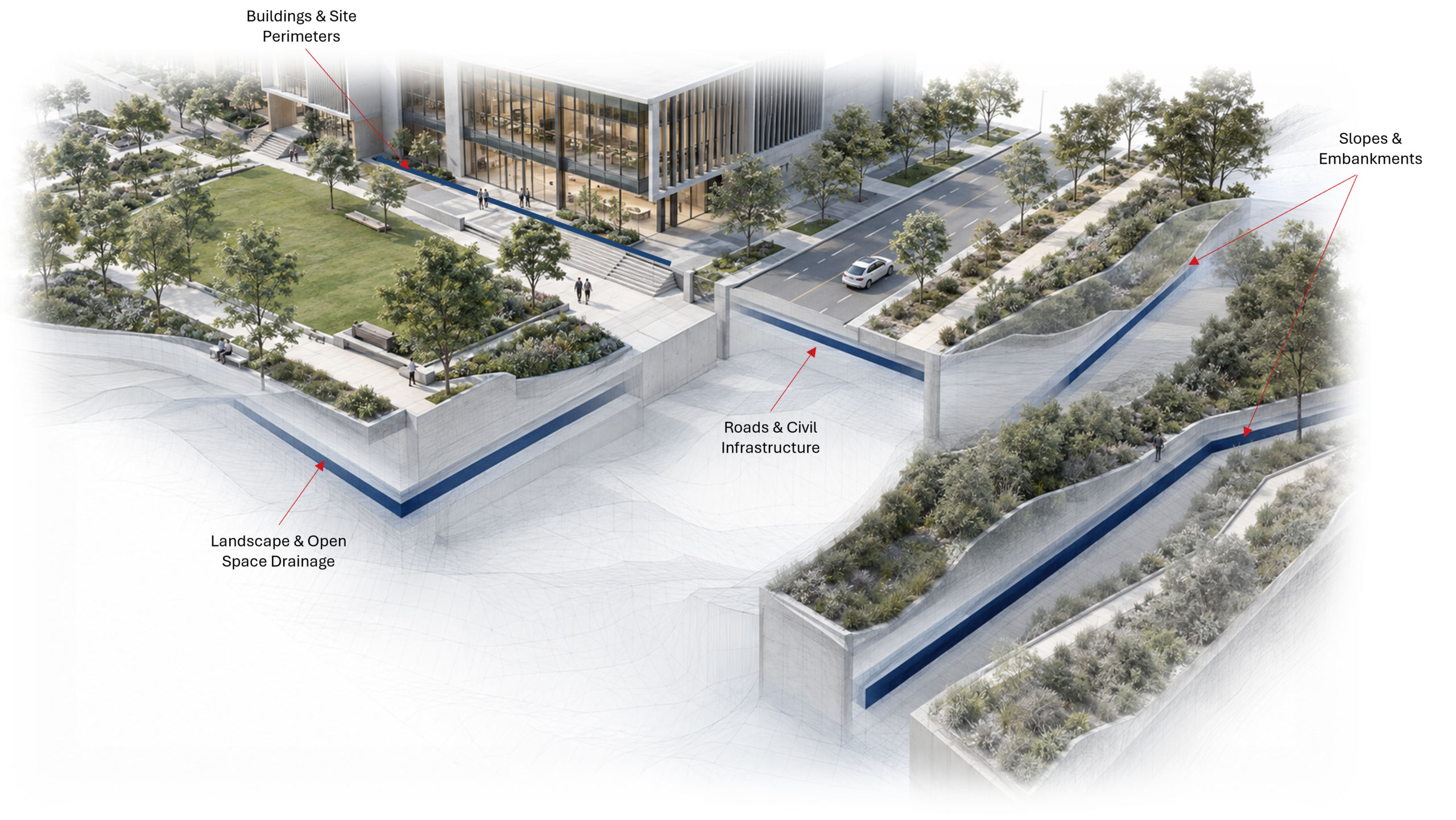
Trench drainage can be integrated across landscape, building and infrastructure projects where subsurface water needs to be intercepted and conveyed along a defined alignment
System Design
Designed Around the Drainage Requirement
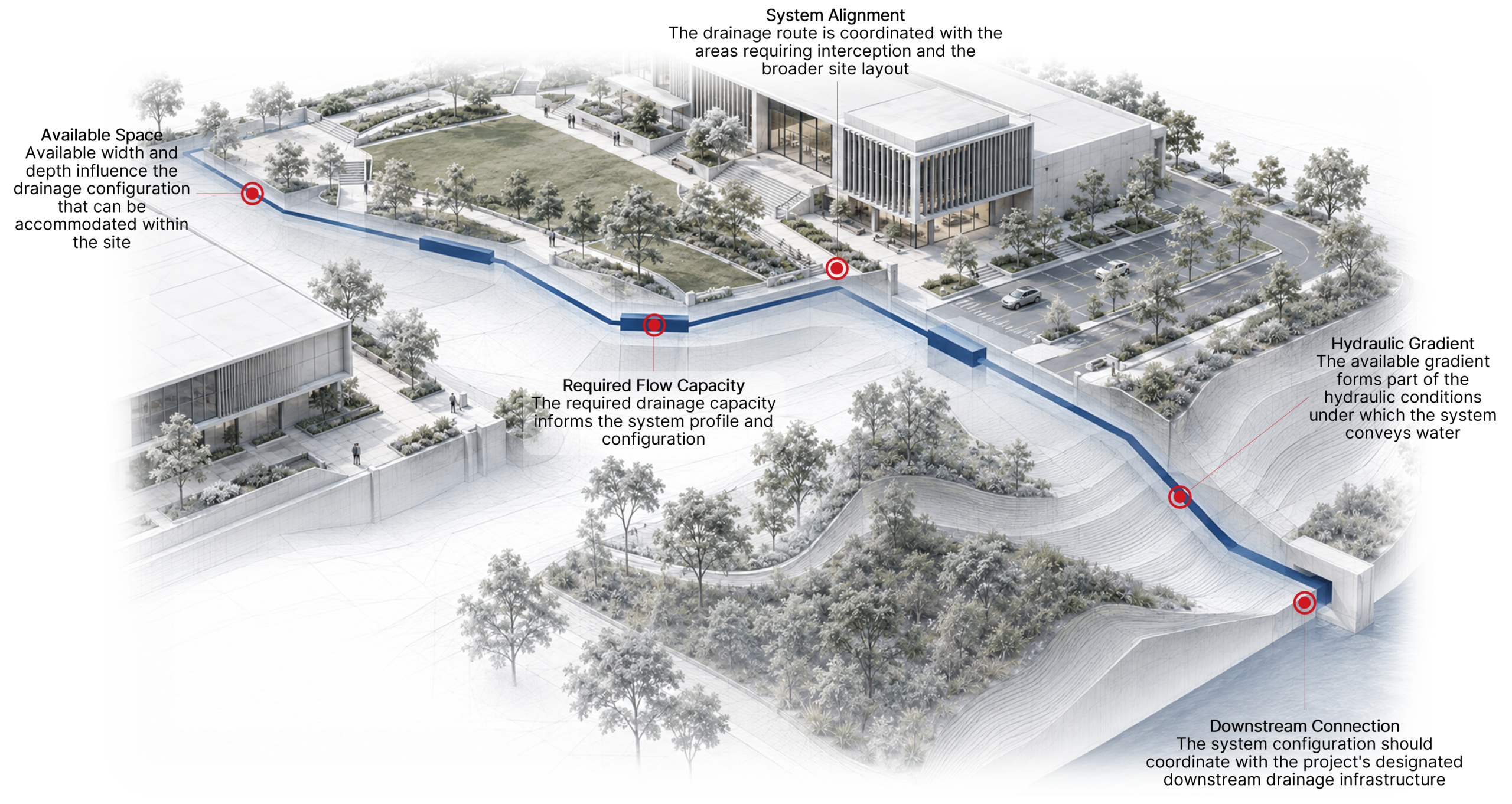
Trench drainage systems can be configured to respond to different hydraulic requirements and site constraints. The required flow capacity, available space, system alignment, hydraulic gradient and downstream connection should be considered when defining the drainage configuration for a project.
Flow Capacity as a Design Parameter
Hydraulic Performance
Trench drainage performance depends on the capacity of the system to convey collected water along the drainage pathway toward the designated outlet. System profile, available flow area and hydraulic gradient therefore form key considerations when selecting a drainage solution for the required flow conditions.
Atlantis trench drainage solutions provide published hydraulic performance across different system configurations. The Flo-Log® range provides in-plane flow capacities from 0.69 to 4.82 L/s at a 1% gradient, depending on the selected profile, while Flo-Pipe® provides a published flow rate of 1.9 L/s/m at a 1% gradient. Hydraulic performance is tested in accordance with BS EN ISO 12958, with product-specific data available within the relevant technical specifications.
OUR PRODUCTS
Trench Drainage Systems
Atlantis offers linear subsurface drainage solutions for different hydraulic requirements, available space and system configurations. Select the appropriate system to explore product-specific dimensions, hydraulic performance and technical information.