Sports Field Drainage Solutions

Sports Field

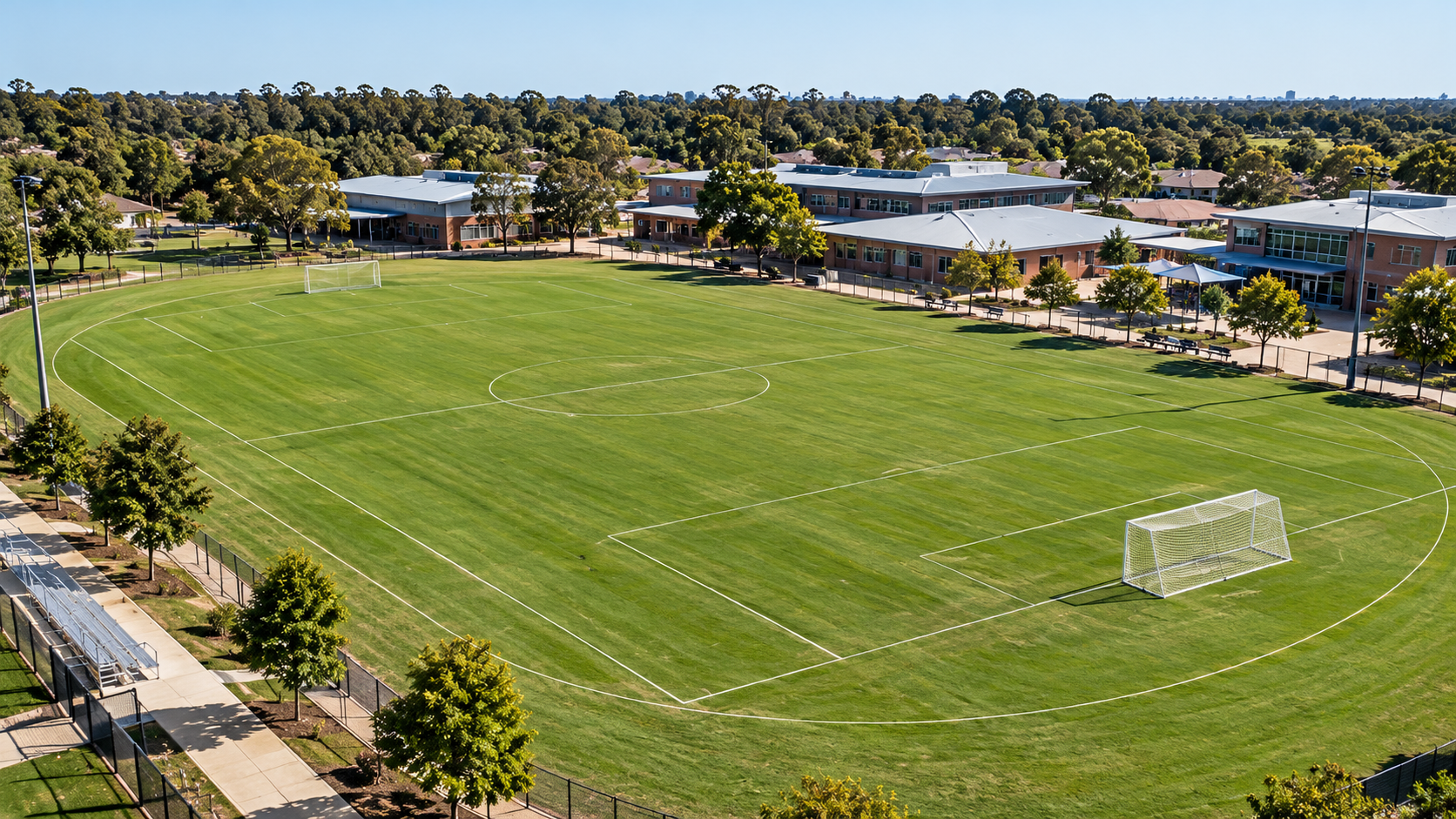
Engineered drainage solutions for natural and synthetic turf sports fields, supporting effective water management, surface stability and reliable playing conditions.

Effective drainage is an essential consideration in the design of natural and synthetic turf sports fields. Rainfall, surface permeability, ground conditions and drainage infrastructure influence how water moves through the playing surface and underlying construction layers, affecting field usability, surface stability and maintenance requirements.

Atlantis modular drainage systems provide a subsurface pathway for collecting and conveying water towards designated outlets. Their integration into sports field construction can support efficient water management while accommodating project-specific requirements for hydraulic performance, structural loading and field configuration.
How the System Works

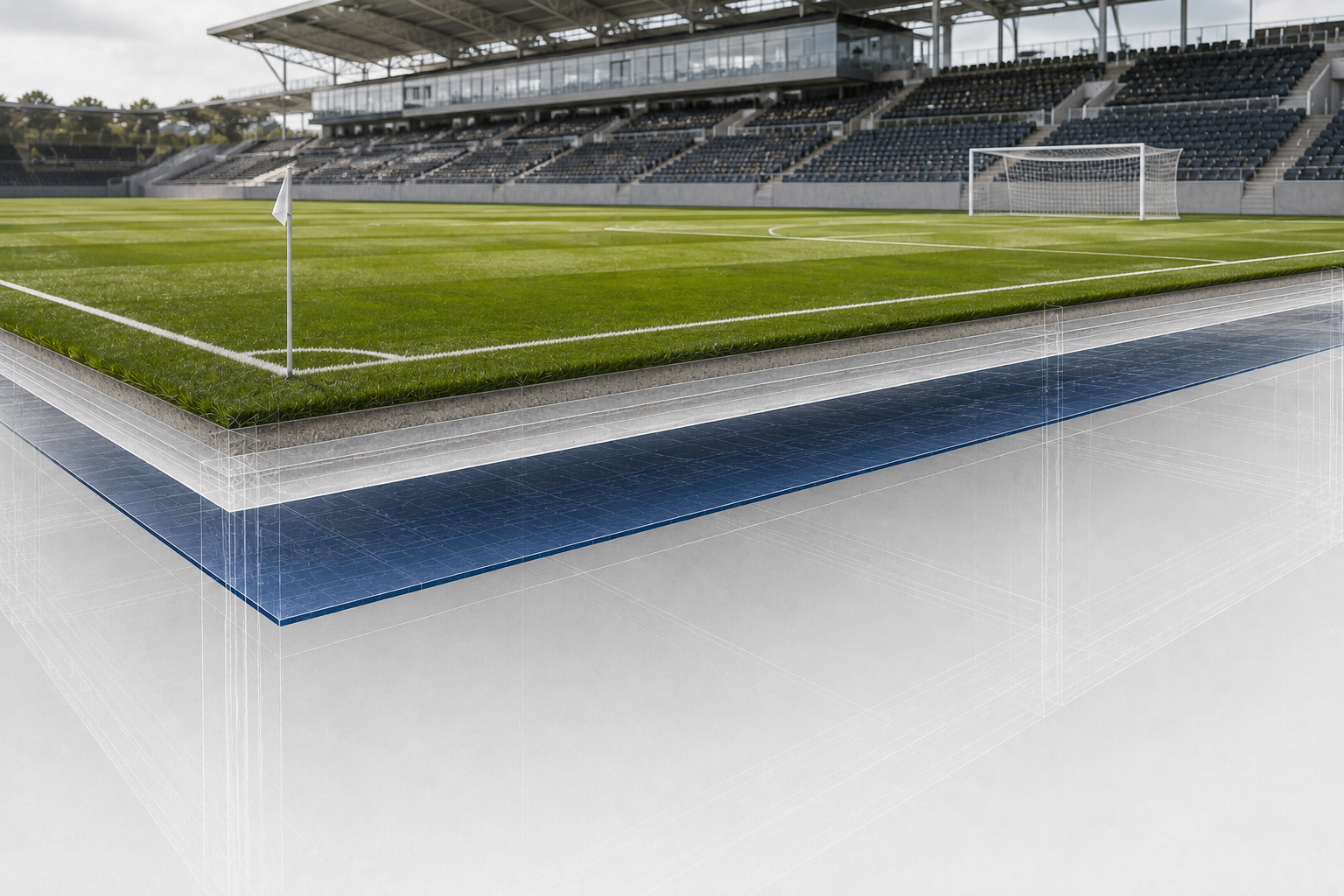
Understanding how water moves through the playing surface and underlying drainage layers is essential to designing effective subsurface drainage systems for natural and synthetic turf sports fields.
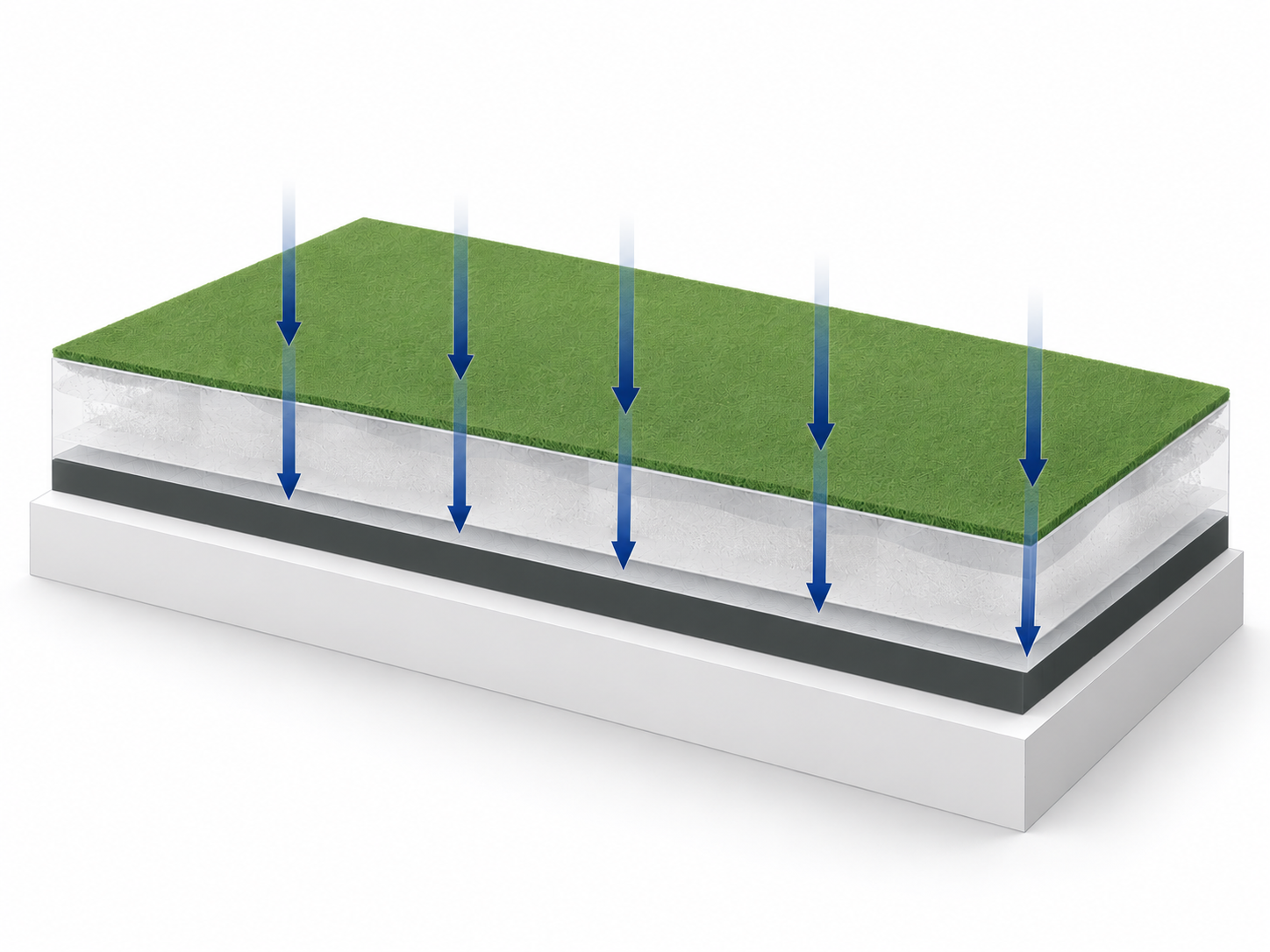
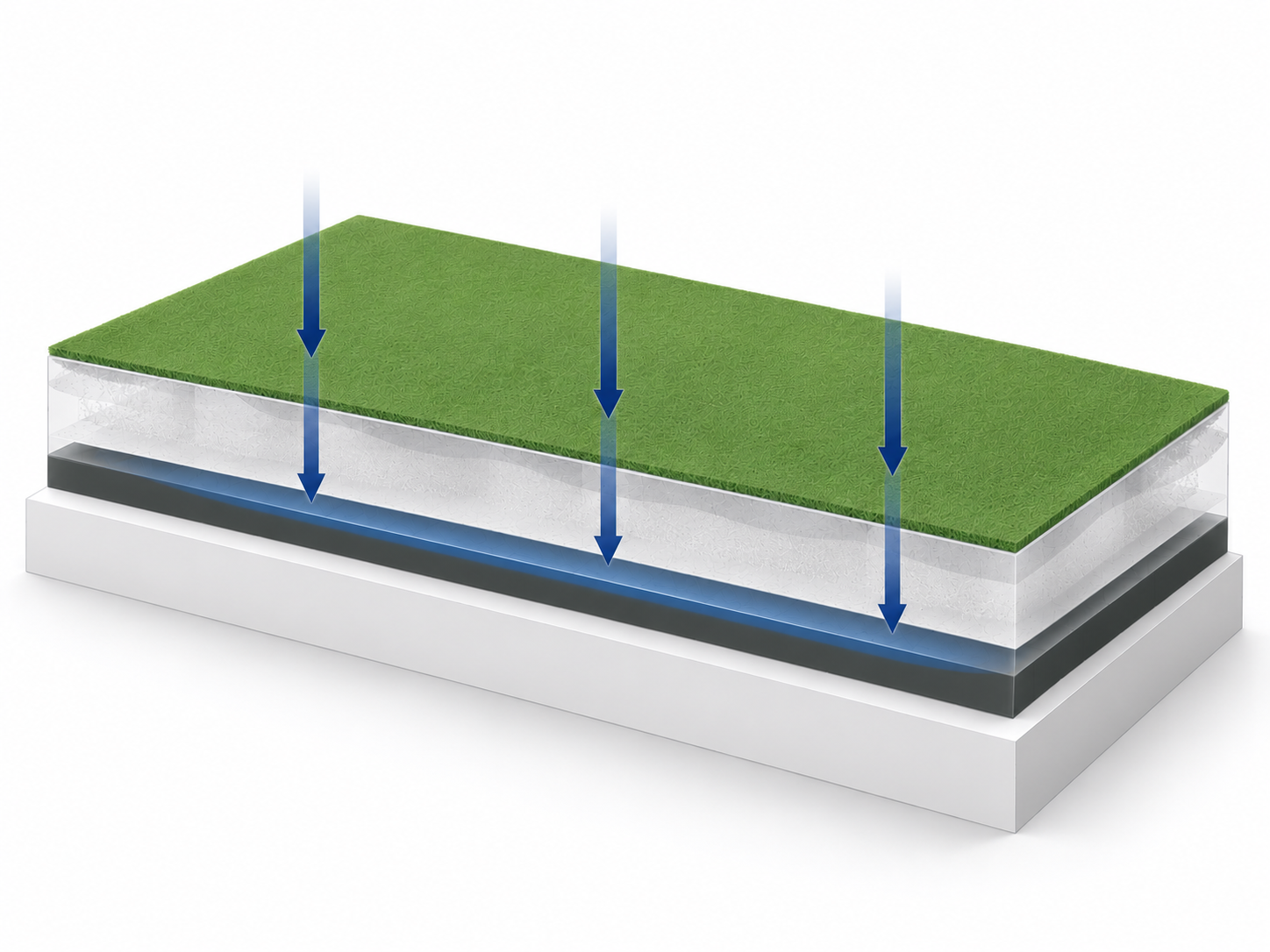
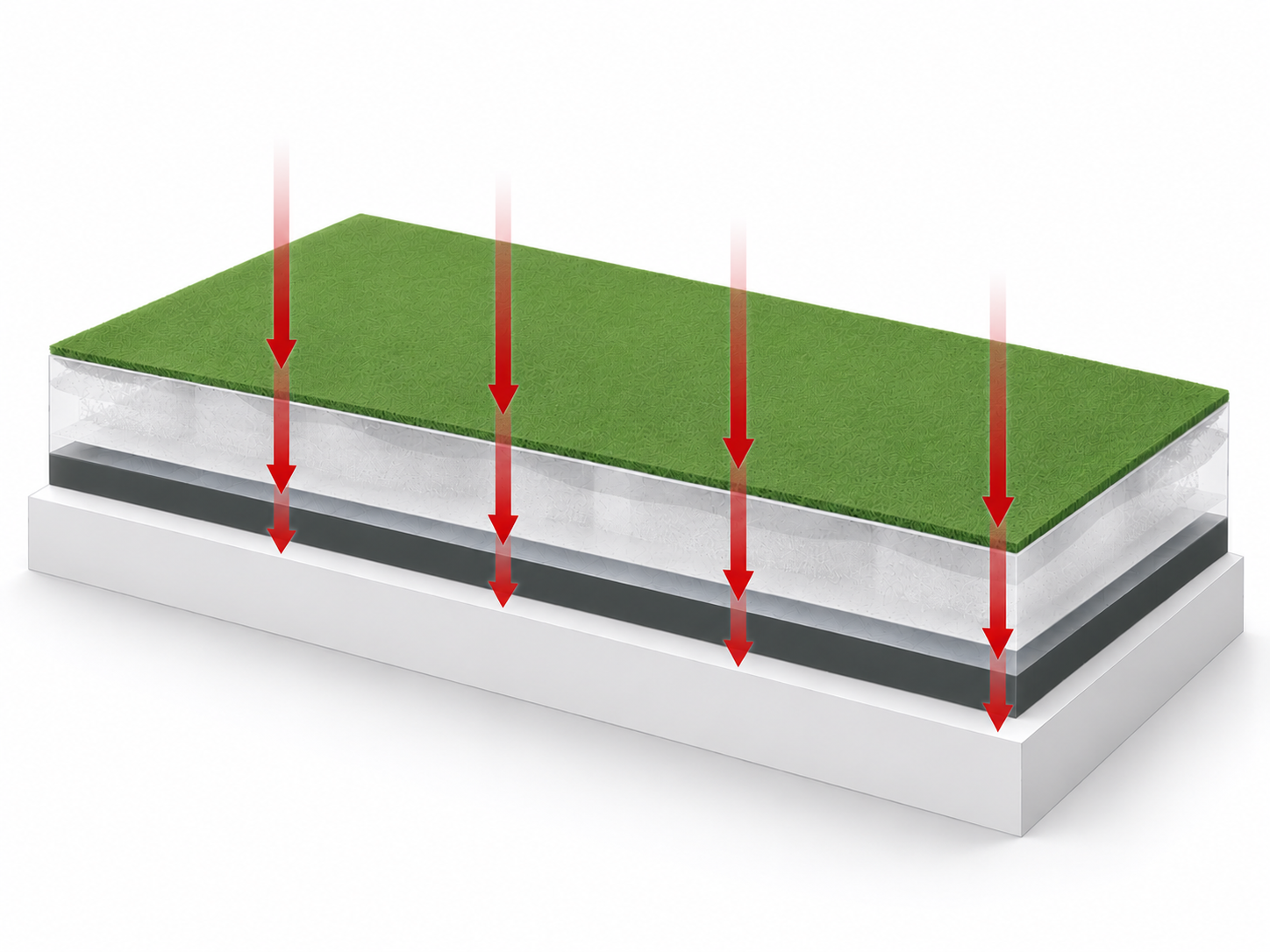
Surface Water Infiltration

Rainwater passes through permeable playing surfaces and underlying construction layers, allowing water to reach the subsurface drainage system. The rate of infiltration depends on the permeability and configuration of the turf, infill and supporting materials.

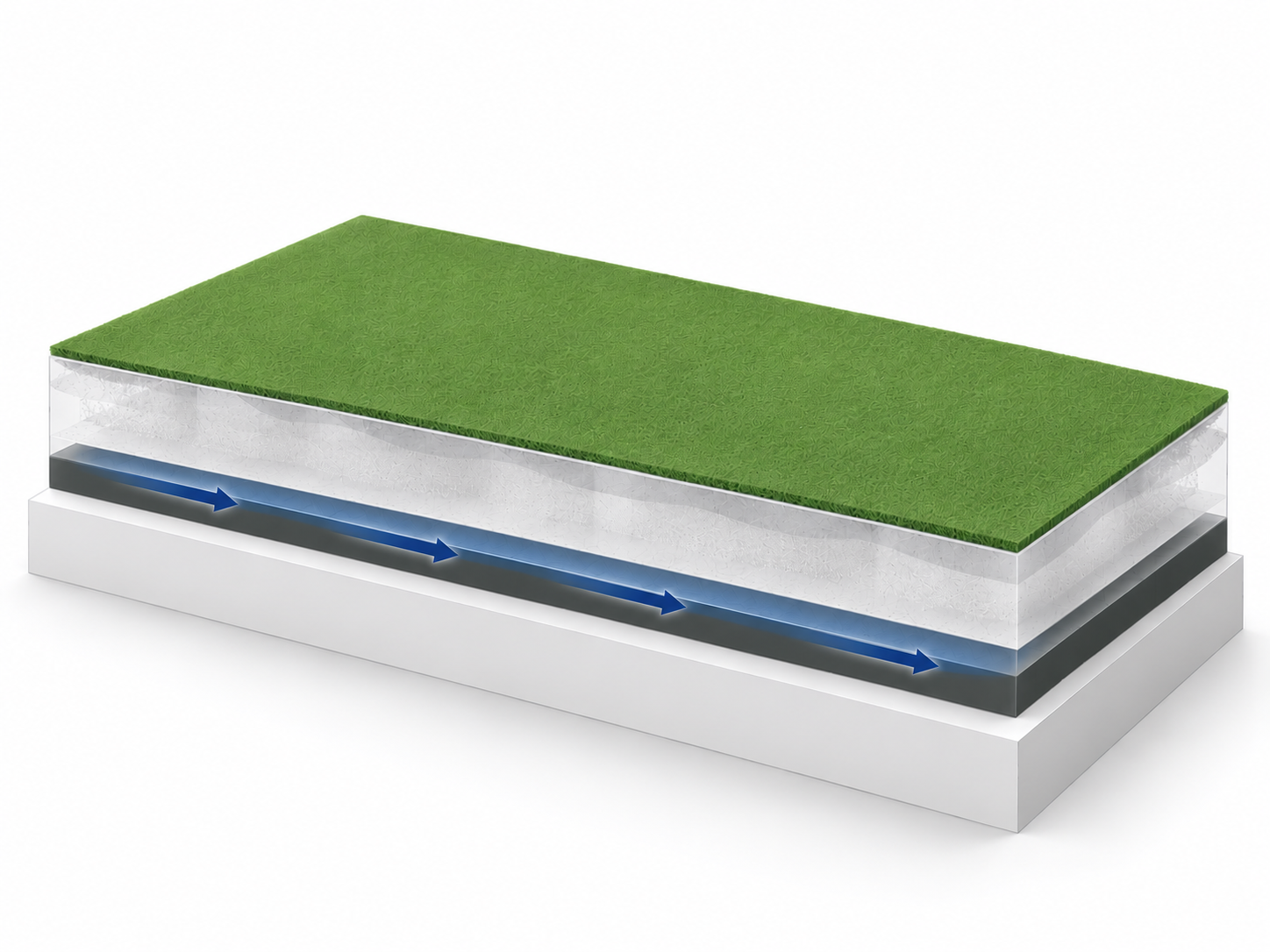
Subsurface Water Collection

A continuous modular drainage layer beneath the field receives water moving through the upper construction layers. Atlantis Flo-Cell® systems provide an open drainage space that helps collect infiltrated water and reduce its accumulation within the field build-up.

Lateral Water Conveyance

Once water enters the drainage layer, it can move laterally towards collection points or designated outlets. Drainage performance depends on the available hydraulic capacity, system gradients and the arrangement of discharge connections.

Structural Support & Load Distribution

The drainage layer forms part of the supporting field assembly and must accommodate loads transferred through the overlying materials. Product compressive resistance, load distribution and the supporting base must be considered to maintain the integrity of the drainage configuration.

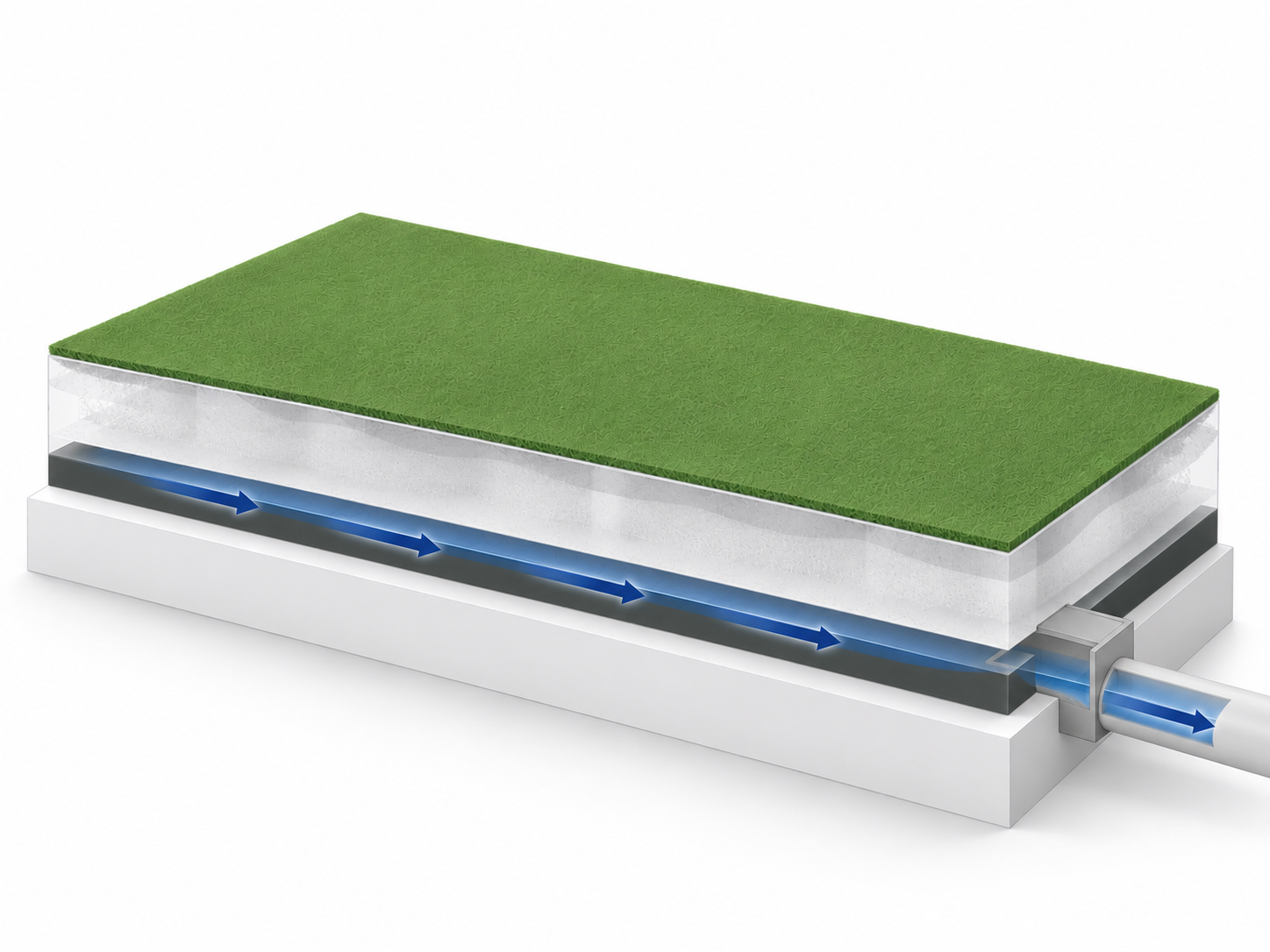
Drainage Network Integration

Subsurface drainage must connect to a suitable collection and discharge network. The arrangement of outlets, perimeter drains and downstream infrastructure determines how collected water is transferred away from the playing surface.

Design Parameters

Sports field drainage design requires consideration of surface permeability, rainfall conditions, hydraulic capacity, structural loading and the configuration of the underlying construction layers. These parameters influence the selection and integration of subsurface drainage systems for natural and synthetic turf applications.

Rainfall Intensity & Drainage Demand

Design rainfall conditions, contributing catchment area and required drainage performance determine the volume and rate of water that the field drainage system must accommodate. These requirements establish the hydraulic demand for the subsurface drainage network.

Surface Permeability & Field Construction

The permeability and arrangement of the playing surface, infill, growing medium and supporting layers influence how water reaches the drainage system. Natural and synthetic turf assemblies require different construction considerations, which must be coordinated with the proposed drainage configuration.

Hydraulic Capacity & Drainage Gradients

The in-plane flow capacity of the drainage layer, available gradients and distance to collection points influence how effectively infiltrated water can be conveyed. System selection must consider the required flow rate under the proposed installation conditions.

Structural Loading & Supporting Conditions

Loads from field use, maintenance equipment and overlying construction materials must be considered alongside the compressive resistance of the drainage system. The supporting base and load distribution through the field assembly influence the suitability of the selected configuration.

Available Construction Depth & Field Geometry

The available depth beneath the finished playing surface determines the space allocated to supporting materials and drainage components. Field dimensions, levels, perimeter conditions and changes in elevation must be coordinated with the selected drainage system.

Outlet Configuration & Downstream Drainage

The location, capacity and elevation of collection points influence the drainage layout and available discharge pathways. Connections to perimeter drains, collector pipes and downstream infrastructure must be designed to accommodate the required flow and site-specific drainage conditions.

Applications

Subsurface drainage systems can be integrated into a range of natural and synthetic turf sports facilities. Drainage requirements vary according to the playing surface, field construction, intensity of use and site-specific conditions, requiring a system configuration suited to each application.
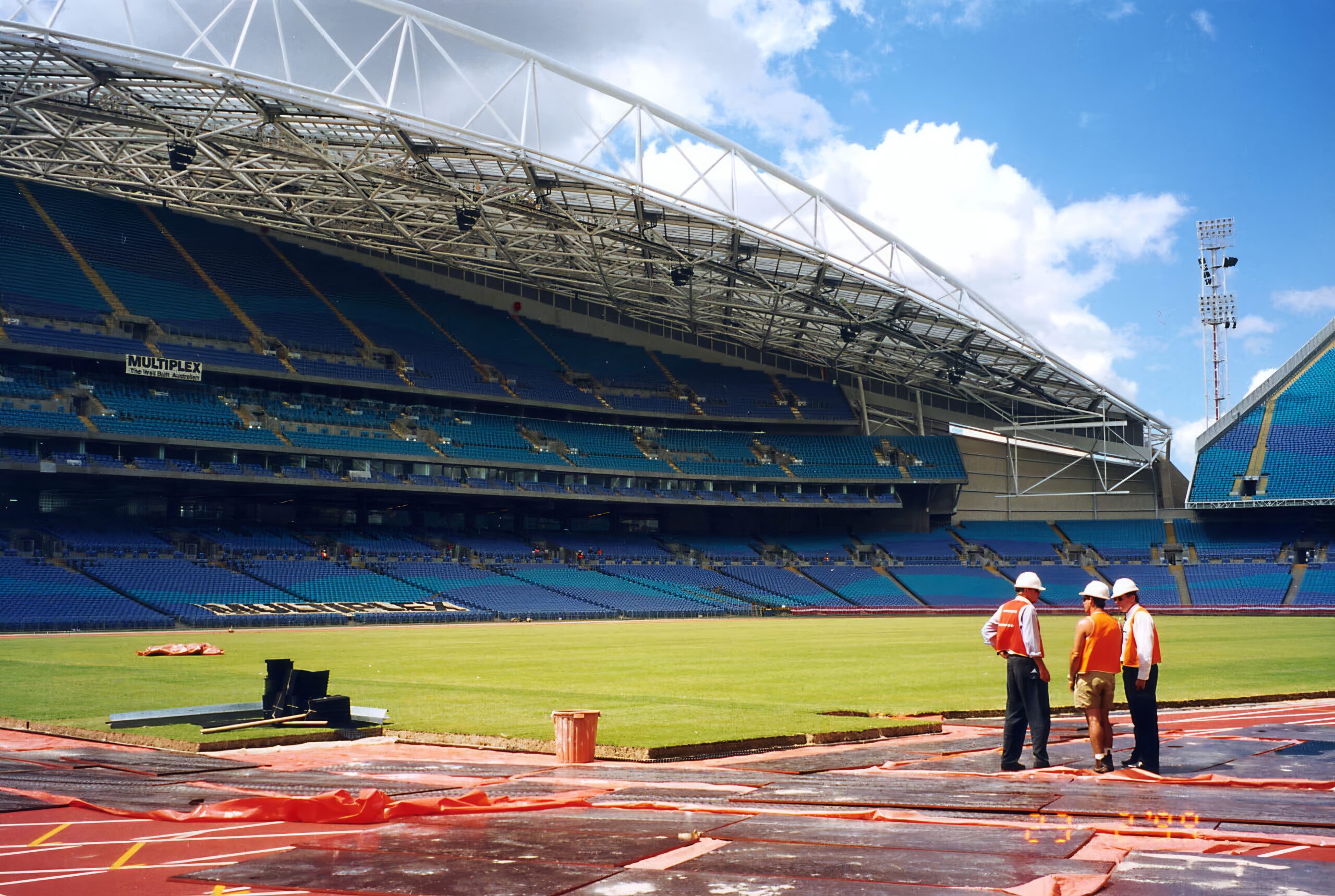
01. Natural Turf Sports Fields

Natural turf sports fields require drainage configurations that account for the interaction between the rootzone, underlying construction materials and subgrade conditions. The permeability and depth of the rootzone influence vertical water movement, while the hydraulic characteristics of the underlying drainage system determine how infiltrated water is collected and conveyed. Field gradients, soil compaction and the location of collection points must be considered to limit prolonged water accumulation within the playing surface construction.

Rootzone Permeability & Depth
The composition, permeability and thickness of the rootzone influence infiltration rates and the movement of water towards the underlying drainage system.

Subgrade Conditions & Drainage Gradients
Subgrade permeability, formation levels and available gradients affect the drainage arrangement and the potential for water accumulation beneath the field.

Hydraulic Capacity & Outlet Spacing
The in-plane flow capacity of the drainage layer, flow path lengths and collection point locations must be coordinated with the required drainage performance.

Atlantis modular drainage systems can be considered as part of the subsurface drainage assembly beneath natural turf fields, providing a drainage pathway for water reaching the underlying construction layers. Product selection and installation configuration must be assessed against the field’s hydraulic requirements, structural conditions and supporting materials.

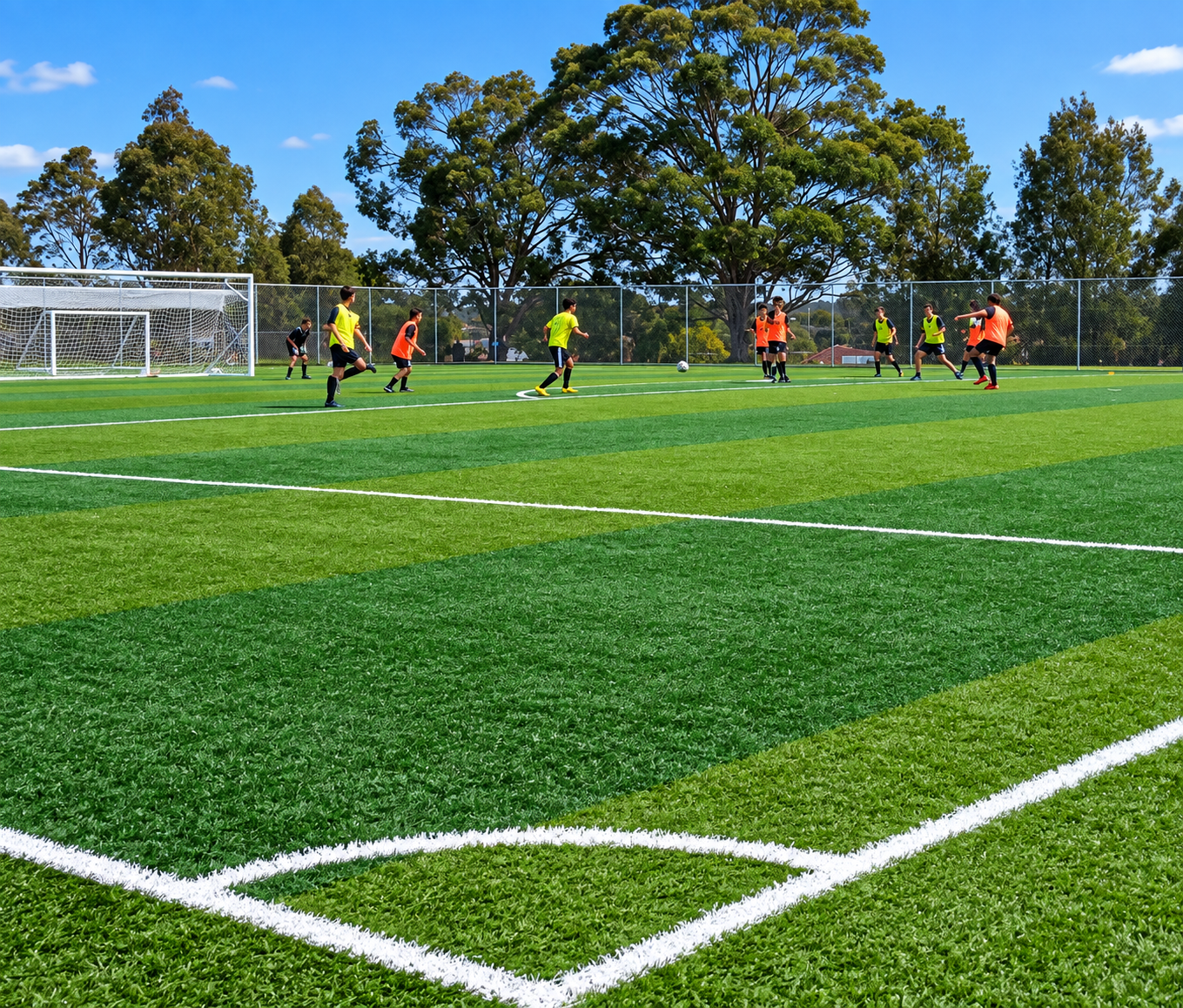
02. Synthetic Turf Sports Fields

Synthetic turf sports fields require drainage configurations that account for the permeability of the turf system, infill materials and underlying construction layers. Where permeable turf assemblies are specified, water must pass through the surface build-up before entering the subsurface drainage system. The hydraulic capacity of the drainage layer, supporting base conditions and arrangement of collection points influence how effectively infiltrated water is conveyed away from the playing surface.

Turf System Permeability
The permeability of the synthetic turf backing, infill and underlying materials determines how water moves vertically through the field construction.

Drainage Layer Capacity & Configuration
The thickness, in-plane flow capacity and arrangement of the subsurface drainage layer must be coordinated with the required drainage performance and available construction depth.

Subgrade Levels & Collection Points
Formation levels, drainage gradients and outlet locations influence lateral water movement and the integration of the drainage system with downstream infrastructure.

Atlantis Flo-Cell® drainage systems can be considered beneath compatible permeable synthetic turf assemblies to provide a continuous subsurface pathway for collecting and conveying infiltrated water. The selected product and configuration must be assessed against hydraulic demand, structural loading, supporting materials and the proposed drainage outlet arrangement.

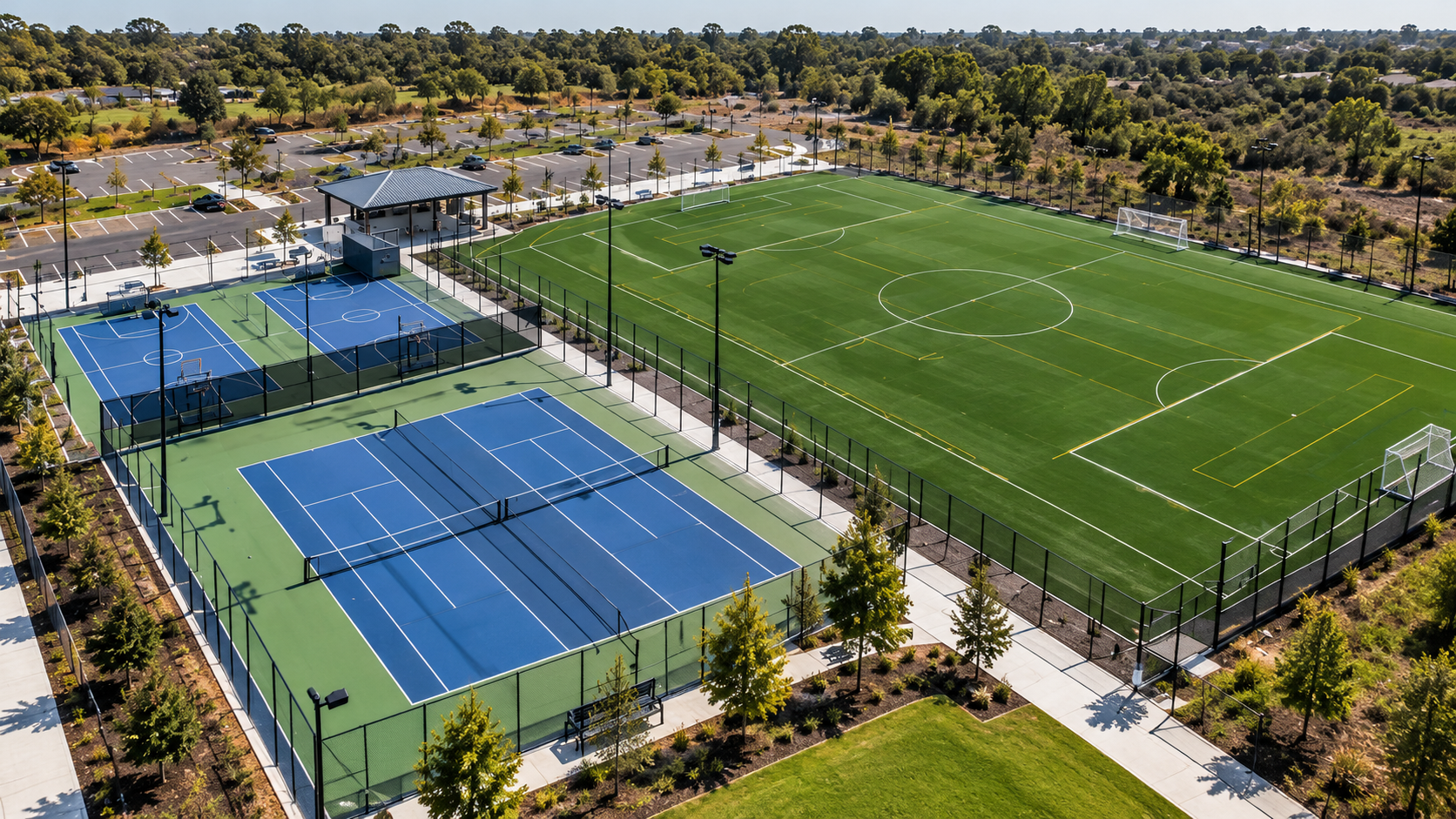
03. Multi-Purpose Sports & Recreation Areas

Multi-purpose sports and recreation areas may incorporate different playing surfaces, construction profiles and patterns of use within a single facility. These variations can introduce changes in permeability, structural loading and available drainage depth. Subsurface drainage design must account for transitions between surface systems, continuity of drainage pathways and the integration of collection points across the development, particularly where the facility accommodates both sporting activities and maintenance access.

Surface Transitions & Drainage Continuity
Changes between turf systems, recreational surfaces and adjacent paved areas require coordination of construction levels and drainage pathways to avoid unintended interruptions or water accumulation.

Variable Loading Conditions
Different activities, maintenance equipment and occasional service access may introduce varying loads that must be considered when selecting the drainage system and supporting construction.

Construction Depth & System Layout
Available depth, surface gradients and the arrangement of collection points influence the configuration of the subsurface drainage system across areas with different construction requirements.

Atlantis modular drainage systems can be evaluated for integration beneath compatible permeable sporting and recreational surfaces. Their configuration can be adapted to project-specific drainage layouts, subject to verification of hydraulic capacity, structural suitability, construction depth and the requirements of each surface assembly.

04. School & Community Sports Grounds

School and community sports grounds often require drainage systems to be integrated within existing site infrastructure, restricted construction footprints and established ground levels. The design must consider the permeability of the proposed playing surface, underlying soil conditions, available discharge points and maintenance access. Where existing drainage infrastructure is retained, its condition, capacity and elevation must be assessed to determine whether it can accommodate the proposed subsurface drainage arrangement.

Existing Site & Subgrade Conditions
Ground permeability, existing formation levels and site constraints influence the feasibility, depth and configuration of the proposed drainage system.

Connection to Existing Infrastructure
The location, invert levels and available capacity of existing drainage connections must be assessed when determining collection points and downstream discharge pathways.

Inspection & Maintenance Access
Drainage layouts should consider access to collection points and associated infrastructure for inspection and maintenance, particularly where facilities experience frequent use or limited maintenance windows.

Atlantis modular drainage systems can be considered for new construction and suitable refurbishment projects where subsurface drainage is required beneath natural or permeable synthetic turf surfaces. Product selection and drainage configuration must be coordinated with site levels, existing infrastructure, hydraulic requirements and the supporting field construction.

OUR PRODUCTS

Explore the Systems

Atlantis drainage systems provide complementary solutions for subsurface water collection, lateral conveyance and integration with drainage infrastructure. Product selection depends on the field construction, required hydraulic performance, structural loading and site-specific drainage configuration.

Atlantis Flo-Cell 20mm drainage cell system for efficient water infiltration and stormwater management.

Flo-Cell® 20mm

Low-profile modular drainage cell for applications with limited construction depth, subject to hydraulic and structural design requirements.

Dimensions
620 x 406 x 20 mm

Flow @ 1%
0.65 L/s/m

Ultimate Strength
90 t/m2

Atlantis Flo-Cell 30mm drainage cell system for improved water infiltration and stormwater management.

Flo-Cell® 30mm

Modular subsurface drainage cell providing an intermediate drainage depth for compatible sports field construction assemblies.

Dimensions
575 x 575 x 30 mm

Flow @ 1%
1.41 L/s/m

Ultimate Strength
50 t/m2

Atlantis Flo-Cell 30mm drainage cell system for improved water infiltration and stormwater management.

Flo-Cell® 50mm

Deeper modular drainage cell providing increased in-plane flow capacity for field configurations requiring greater subsurface conveyance capacity.

Dimensions
575 x 575 x 50 mm

Flow @ 1%
2.56 L/s/m

Ultimate Strength
140 t/m2

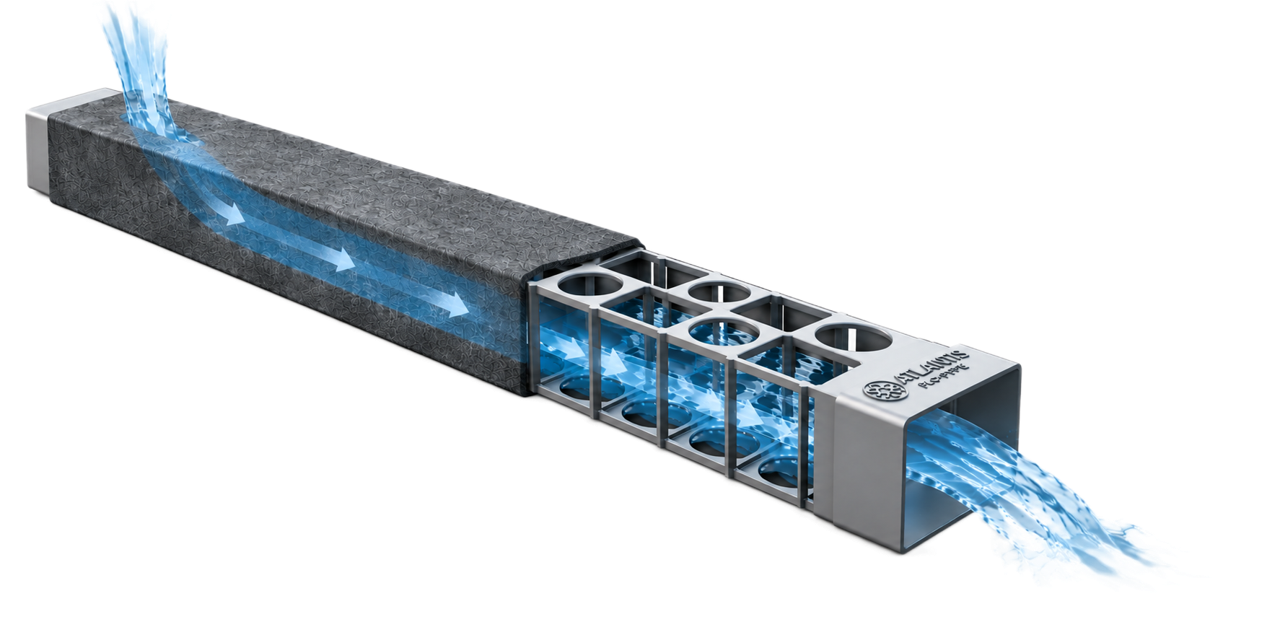
Flo-Pipe®

Subsurface pipe drainage system for integration into suitable collection and conveyance networks, subject to the specified hydraulic layout and outlet configuration.

Dimensions
1080 x 100 x 80 mm

Flow @ 1%
1.9 L/s/m


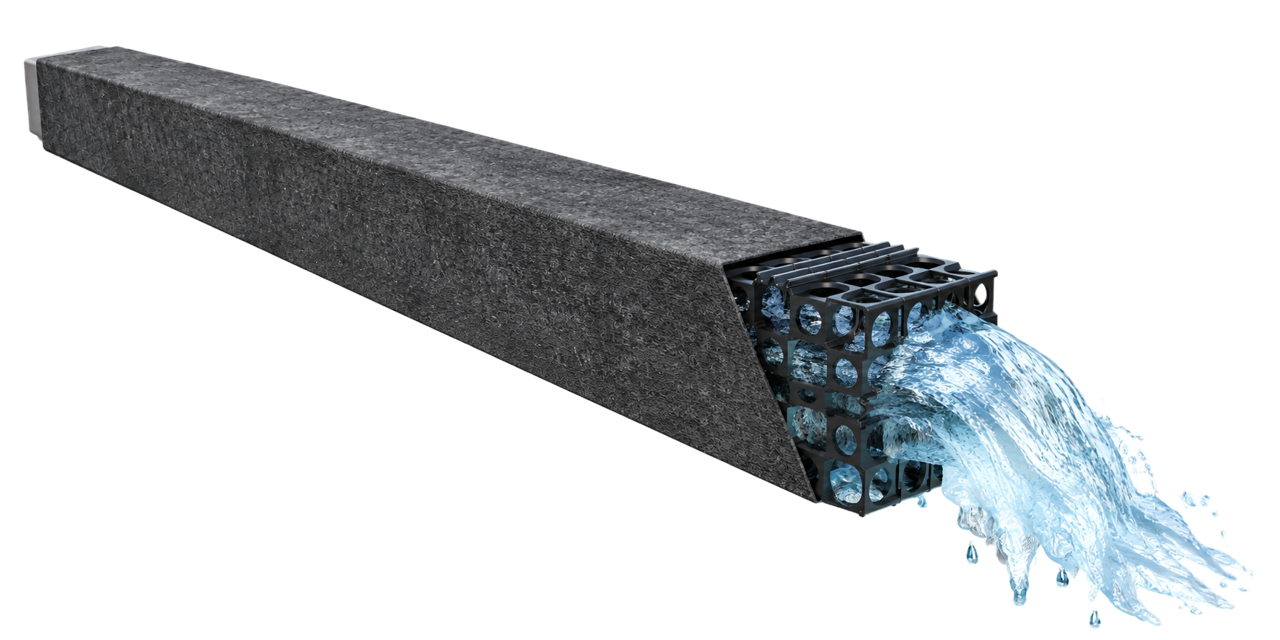
Flo-Log®

Modular linear subsurface drainage system for collection and conveyance within suitable drainage layouts and supporting construction conditions.

Dimensions
1920 x 52/104/156/208 364 x 260 mm

Flow @ 1%
0.69 to 4.82 L/s/m