Equestrian Surface Solutions

Equestrian Surfaces

Engineered ground stabilisation and drainage solutions for equestrian facilities, supporting surface stability, effective water management and the performance of riding and access areas.

Equestrian surfaces require careful consideration of ground stability, drainage performance and the interaction between surface materials and underlying construction layers. Repeated hoof impacts, concentrated loading and changes in moisture conditions can influence surface deformation, compaction and the long-term performance of riding and access areas.

Ground stabilisation and drainage systems can form part of an engineered surface assembly, helping maintain the integrity of granular materials while facilitating water movement through permeable construction layers. The selection and configuration of these systems must account for subgrade conditions, anticipated loading, surface composition and site-specific drainage requirements.
System Principles

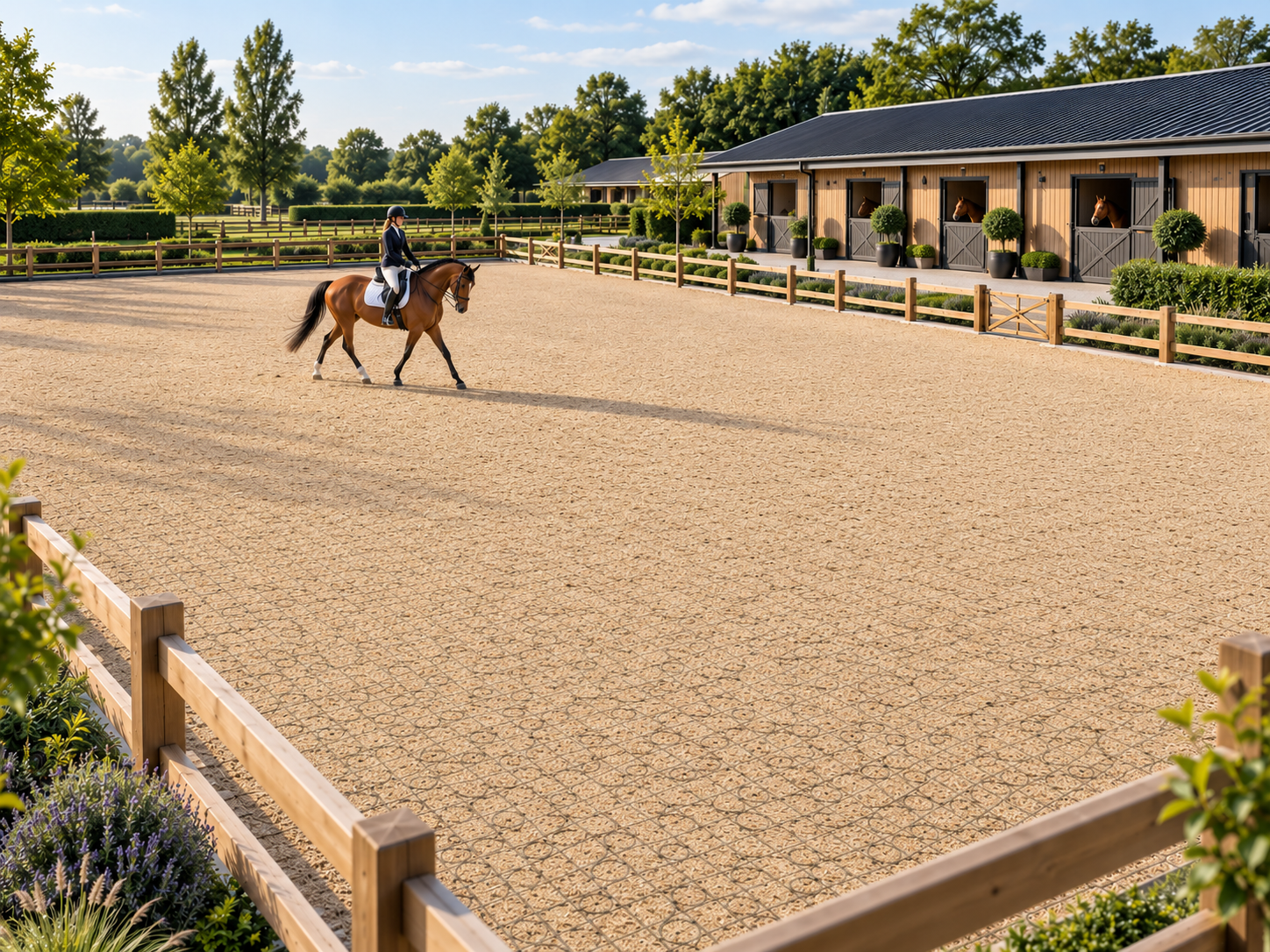
Engineered equestrian surfaces rely on the interaction between granular materials, ground-stabilisation systems, supporting layers and subsurface drainage. Understanding how these components respond to concentrated hoof loads and changing moisture conditions is essential when designing riding arenas, training yards, stables and equestrian access areas.
Granular Material Containment

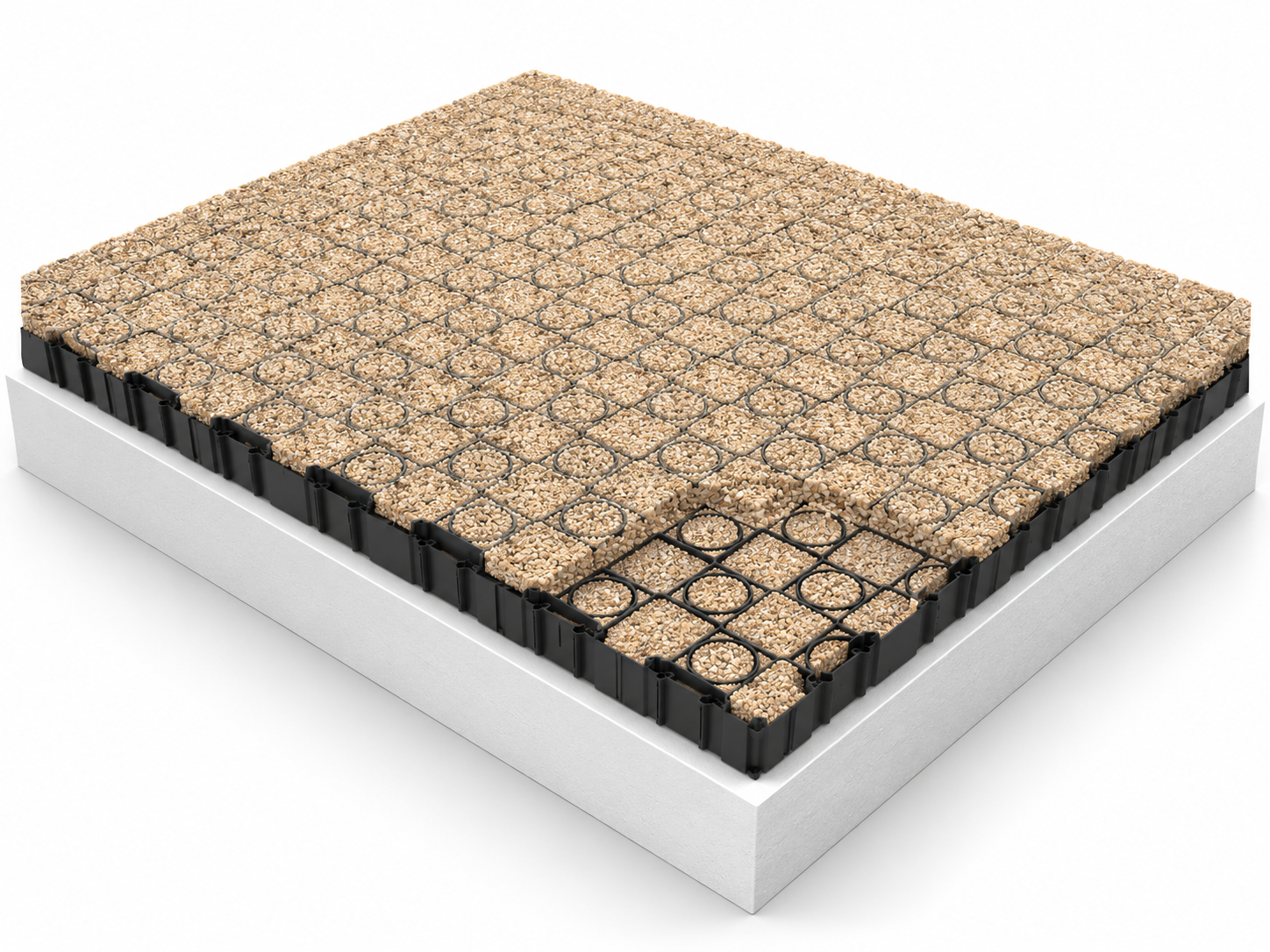
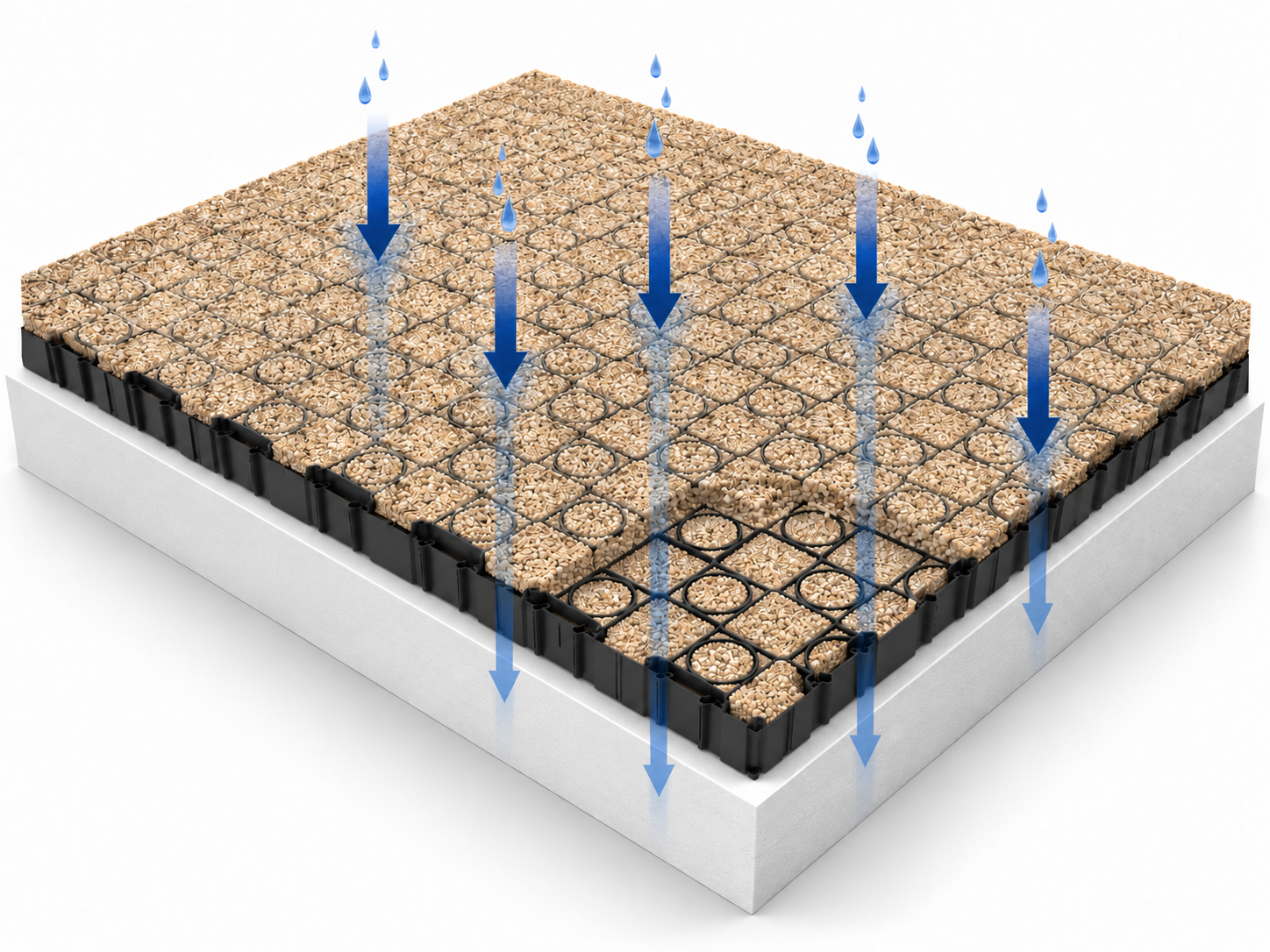
Cellular ground-stabilisation systems provide a defined structure for containing granular infill and restricting its lateral displacement under repeated loading. The effectiveness of material confinement depends on cell geometry, infill grading, compaction and the relationship between the stabilisation layer and the overlying equestrian surface.

Surface Stability & Load Distribution

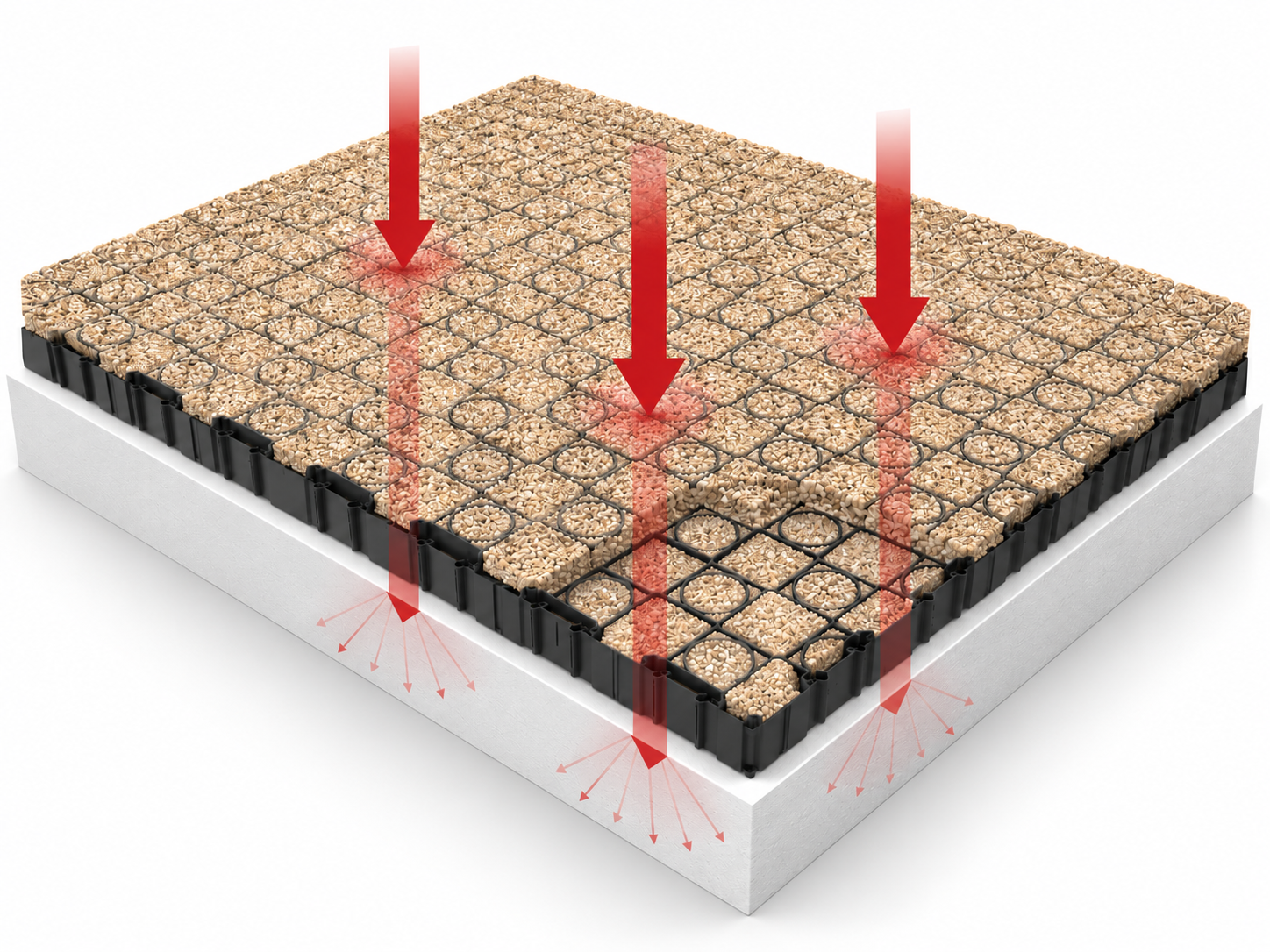
Equestrian surfaces are subjected to repeated, concentrated and dynamic loads generated by hoof contact and movement. Cellular stabilisation systems can contribute to surface stability by restricting infill displacement and interacting with the supporting construction. Load transfer and resistance to deformation depend on the complete surface assembly, including the granular materials, base preparation and subgrade bearing capacity.

Surface Water Infiltration

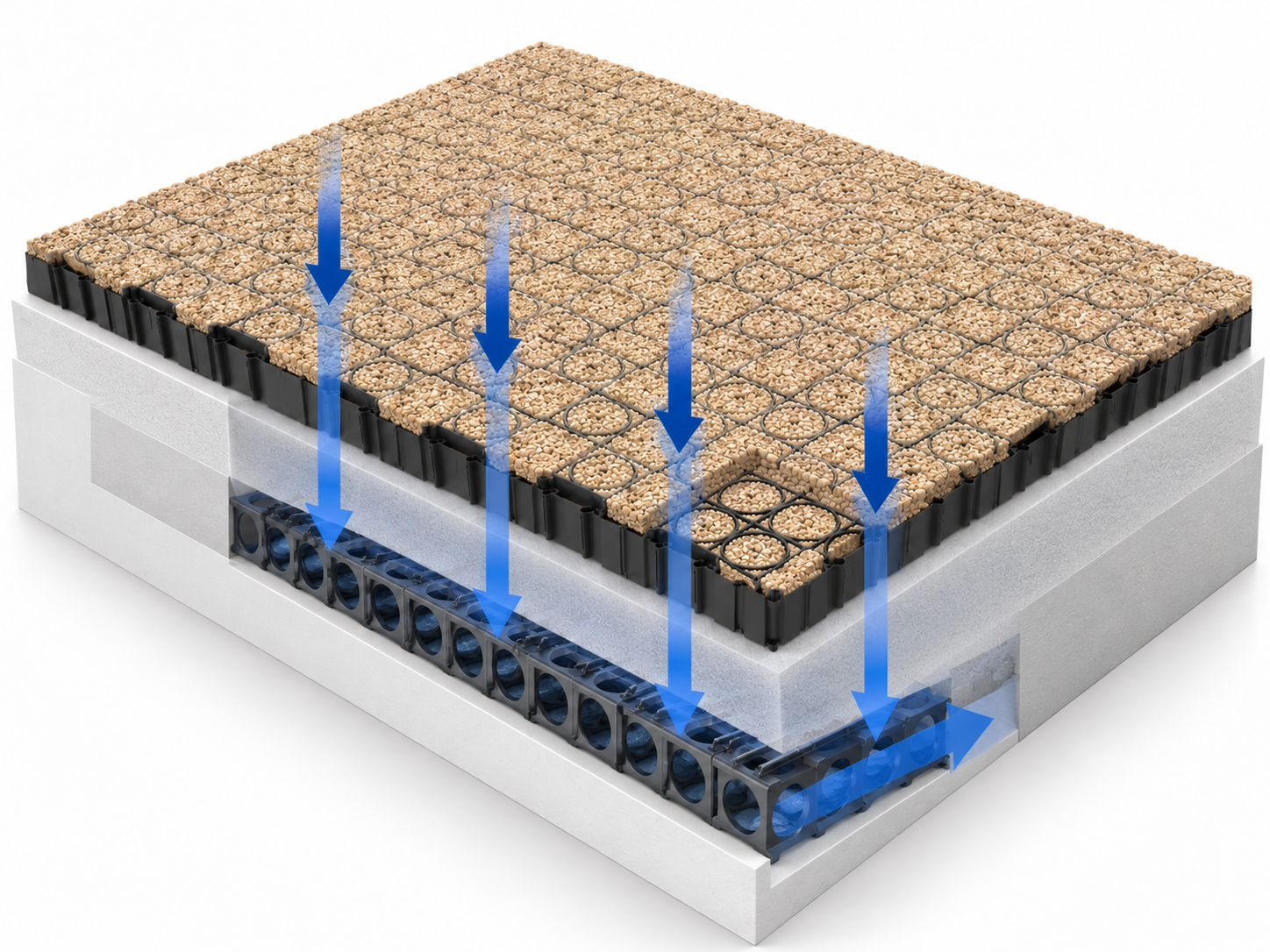
In permeable equestrian surface assemblies, rainfall and surface water can infiltrate through the granular materials towards the underlying construction layers. Infiltration performance is influenced by material grading, fines content, compaction, moisture conditions and the permeability of the supporting base. The presence of a cellular stabilisation layer does not, by itself, guarantee adequate drainage.

Subsurface Drainage & Conveyance

Where subsurface drainage is required, infiltrated water must be collected and conveyed through a suitable drainage network towards designated discharge points. Linear drainage systems, such as Atlantis Flo-Log®, may be incorporated into the supporting construction where appropriate. Drainage performance depends on hydraulic capacity, collection spacing, gradients, surrounding materials and downstream outlet conditions.

Design Considerations

The design of equestrian surfaces requires consideration of surface composition, anticipated loading, ground conditions and drainage performance. These parameters influence the selection and configuration of stabilisation and subsurface drainage systems across riding arenas, training yards, stables and equestrian access areas.
01 — Surface Material & Particle Size

Equestrian surfaces may incorporate granular footing, reinforced grass or compacted aggregate materials, depending on the intended application. Material composition, particle size distribution, fines content and surface characteristics influence stability, permeability and compatibility with cellular stabilisation systems. Selection should consider the specific requirements of riding areas, training yards and equestrian access routes.

02 — Hoof Loading & Traffic Intensity

Equestrian surfaces are subjected to concentrated, repeated and dynamic loads associated with hoof contact, turning and movement. Design should consider the intended activity, frequency of use and loading intensity, together with any additional requirements associated with maintenance equipment, service vehicles or other operational traffic.

03 — Subgrade Bearing Capacity & Compaction

Subgrade bearing capacity, moisture sensitivity and the condition of the supporting base influence the stability of the overall surface assembly. Appropriate preparation, compaction and uniformity of the supporting layers should be considered to reduce the risk of localised deformation, rutting and differential settlement under repeated loading.

04 — Permeability & Drainage Requirements

The permeability of surface and supporting materials influences the movement of water through the equestrian surface assembly. Design should consider rainfall exposure, material grading, infiltration characteristics and site drainage conditions, together with the need for subsurface collection and conveyance where required. Drainage capacity and available discharge conditions must be considered as part of the overall water management strategy.

05 — Construction Depth & Layer Configuration

The thickness, sequence and arrangement of the surface, stabilisation and supporting layers must be appropriate for the intended equestrian application. The position of the cellular stabilisation system should be coordinated with the required footing or wearing surface, anticipated loading, material compatibility and any subsurface drainage components. Layer configurations should be determined according to project-specific conditions.

06 — Gradients, Outlets & Maintenance

Surface levels, drainage gradients and available discharge points influence the collection and removal of water from equestrian facilities. Drainage design should consider outlet capacity, inspection and maintenance access, and the potential for sediment and fine particles to accumulate within drainage pathways. Ongoing maintenance requirements should be considered when selecting and configuring the system.

Applications

Atlantis Stable Grid reinforced with Atlantis Cells for stable and durable surfaces in an arena setting.

Arena Application

  • Ground Stability
  • Excellent Drainage

Reinforced Grass Application

  • Ground Stability
  • Excellent Drainage
  • Durable Reinforced Surface
  • Rut Proof
Atlantis Stable Grid reinforced with Atlantis Cells for a durable and stable grass surface.
Atlantis Stable Grid reinforced with Atlantis Cells for stable, durable surfaces in stables and training yards.

Stables & Training Yards

  • Ground Stability
  • Excellent Drainage
  • Durable Reinforced Surface
Installation of Atlantis Cells in Stable Grid application for durable grass and soil reinforcement.
Atlantis Cells being installed in Stable Grid for a stable and reinforced grass surface.
Installation of Atlantis Cells in Stable Grid application for soil stabilization and grass reinforcement.
Installing Atlantis Cells in Stable Grid to create a durable surface for high-traffic areas.

Products

Atlantis Flo-Cell 50mm drainage cell system for large-scale stormwater management and water retention.

Atlantis Gravel Cell®

Atlantis Logs for trench drainage system ensuring efficient water flow and soil stability.

Atlantis Flo-Log®